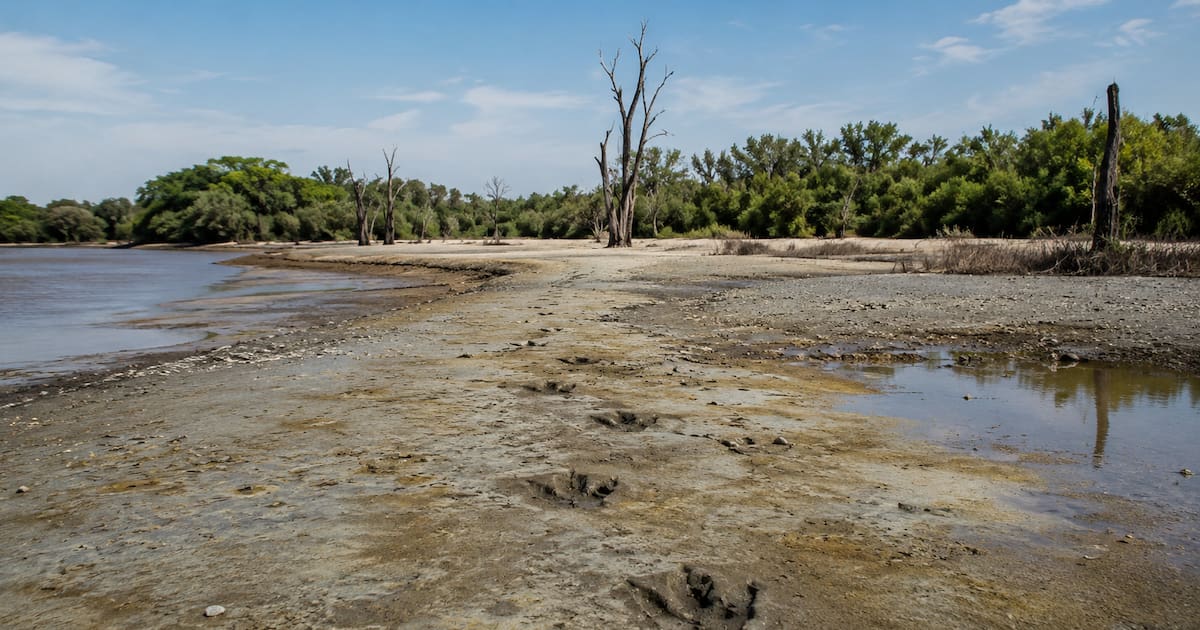
Guy Plint spotted the dinosaur tracks in 1988 in a remote river delta near Tumbler Ridge in north-eastern British Columbia, Canada, but it was not until 34 years later that the site was finally investigated. The tracks date from the Coniacian – a period that lasted approximately 89.75–86.5 million years ago – and are among the earliest dinosaur tracks from this stage to have been found in Canada.
Why did the study take 34 years?
The site of the discovery is in such a remote area that it can only be reached by helicopter. In 2022, Plint, together with Charles Helm, began a detailed study. The findings were published in the journal *Historical Biology*.
What was the climate like during the Middle Cretaceous?
During the Middle Cretaceous, a significant part of what is now the Great Plains of North America was covered by a wide, shallow sea. In the Tumbler Ridge area, the river system formed a delta extending towards the sea. The sediments of this ancient delta are known as the Marshybank Formation and contain terrestrial sections in which footprints have been preserved.
What exactly were the traces found?
The most common footprints found have three broad, blunt toes and measure between 30 and 50 centimetres in width. Scientists have identified them as the footprints of ornithopods, known as „duck-billed” dinosaurs. These large herbivores may have moved on their hind legs or walked on all fours.
The second most common type of footprint has three narrower, elongated toes with claw marks. Researchers believe these belong to carnivorous theropod dinosaurs.
The link with changes in vegetation
As there were numerous angiosperms at the site of the discovery, experts link the spread of the herbivorous dinosaurs of Cognac – particularly ornithopods – to the diversity and range of flowering plants.