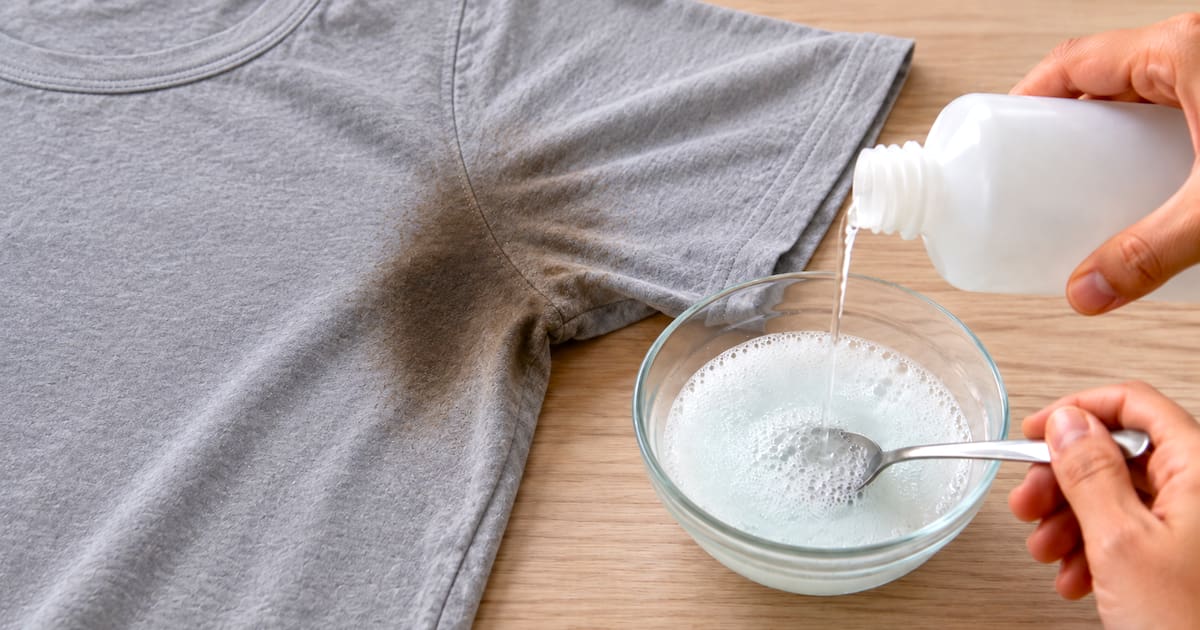
Yellow, dark or whitish underarm stains on clothing are caused by a build-up of deodorant, sweat, body oils and minerals present in some antiperspirants. This home remedy combines hydrogen peroxide with liquid washing-up liquid in a ratio of two tablespoons of hydrogen peroxide to one tablespoon of washing-up liquid.
How to prepare and apply the mixture
Mix two tablespoons of hydrogen peroxide with one tablespoon of liquid washing-up liquid. Apply the mixture directly to the stain and leave it to allow the ingredients to work on the stain.
Hydrogen peroxide can bleach certain fabrics, so take particular care with black, dark or brightly coloured clothes. Before using it, it is advisable to test the mixture on an inconspicuous area of the fabric.
Why does this combination remove stubborn stains?
Both products serve different yet complementary functions. The detergent contains active ingredients that help remove oils, grease and dirt, whilst hydrogen peroxide acts as an oxidising agent and can help lighten certain stubborn stains.
This treatment is recommended for stubborn stains, such as those caused by a combination of deodorant, sweat and residue trapped in the fibres. Hydrogen peroxide also has antimicrobial properties.
Additional uses for the mixture
This mixture can mainly be used as a household stain remover and cleaning agent. The liquid detergent helps to remove grease and caked-on dirt, whilst hydrogen peroxide helps to oxidise certain stains.
This mixture is not only effective on stained clothes, but also has a wider range of cleaning uses around the home.
What must not be combined with this mixture
Do not mix this product with bleach, ammonia or other cleaning products. Such combinations can be dangerous and may reduce the effectiveness of the treatment.